
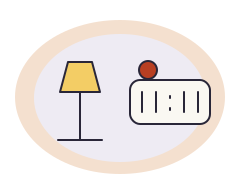
A lamp on a plug-in timer
A plug-in timer switches a lamp on at the time you set. Use a warm, dim bulb and keep the lamp and its cord out of reach. It gives one signal, light on, and it cannot show bedtime or count down a nap.
A smart bulb you already own
If you have a smart bulb, most apps can schedule a color at a time: a dim color at bedtime and a different one at wake-up. It needs the app and your home network to change, like an app clock, and it lights the whole room rather than a small signal.
A clock and a sticker
For a child who knows a few numbers, a digital clock with “7” marked on a sticker can work: when the first number is 7, you can get up. It needs a child who can match numbers, so it suits slightly older children.
What a real OK-to-wake clock adds
- A bedtime color and a wake-up color from one device your child can learn.
- An “almost time” glow on some clocks, which helps a child wait.
- Nap timers, locks and a dimmable display, and on some, a battery for power cuts.
After the OK-to-wake years
Once school mornings start and your child can read the time, an alarm clock is the next step, and many OK-to-wake clocks already have a separate alarm. The kids alarm clock guide lists them.
Sources
Details can differ between versions and countries. Every source we use